02: The problem
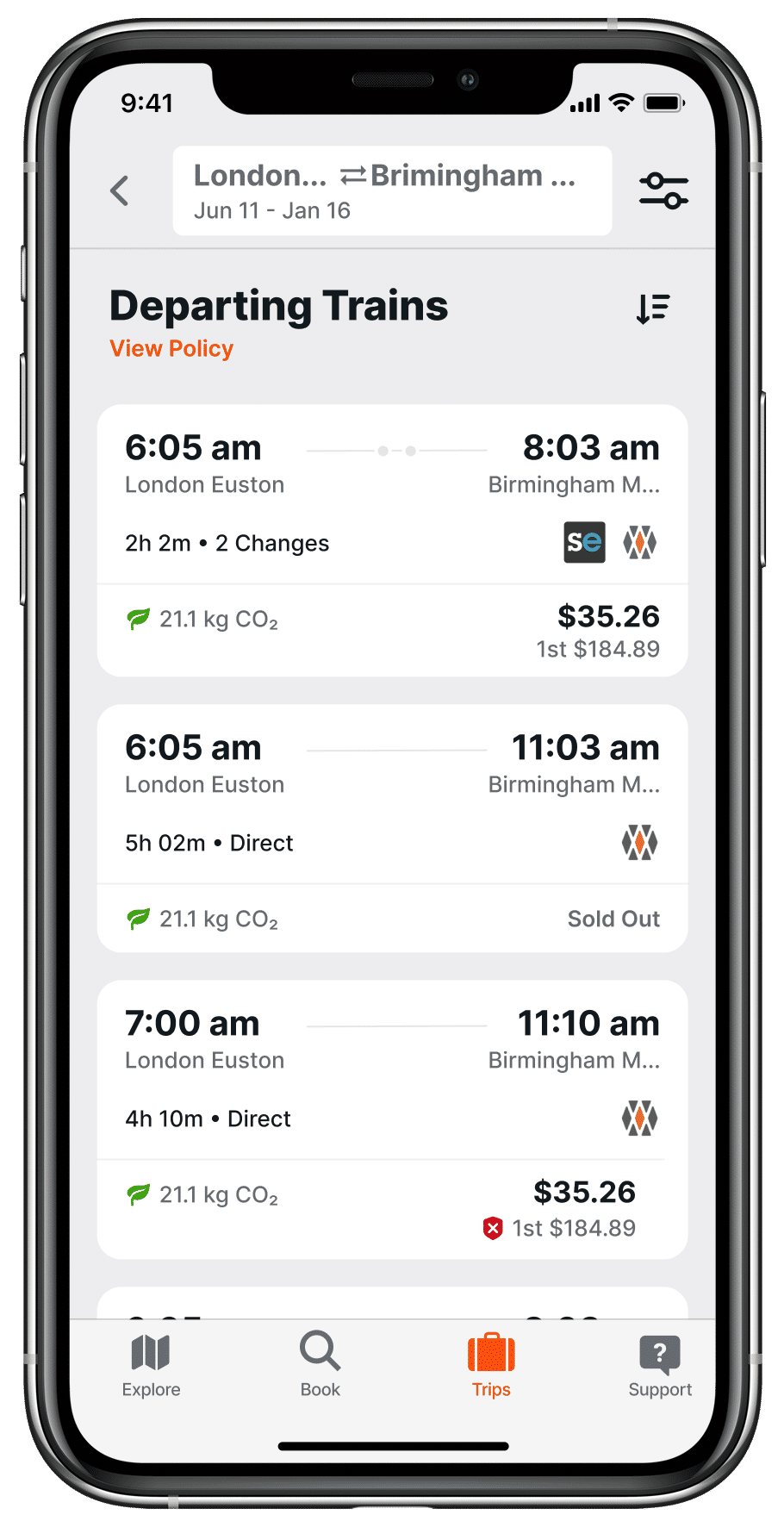
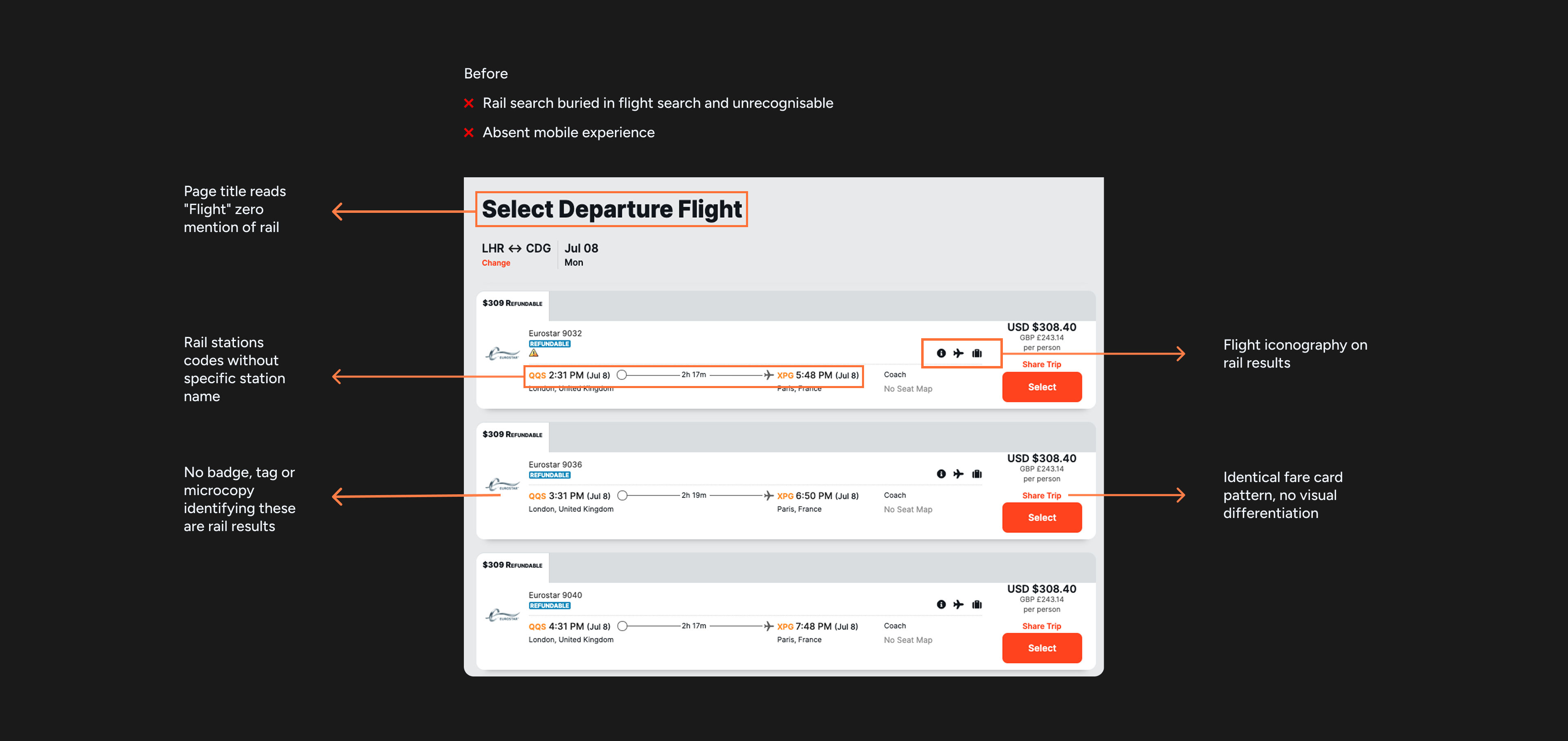
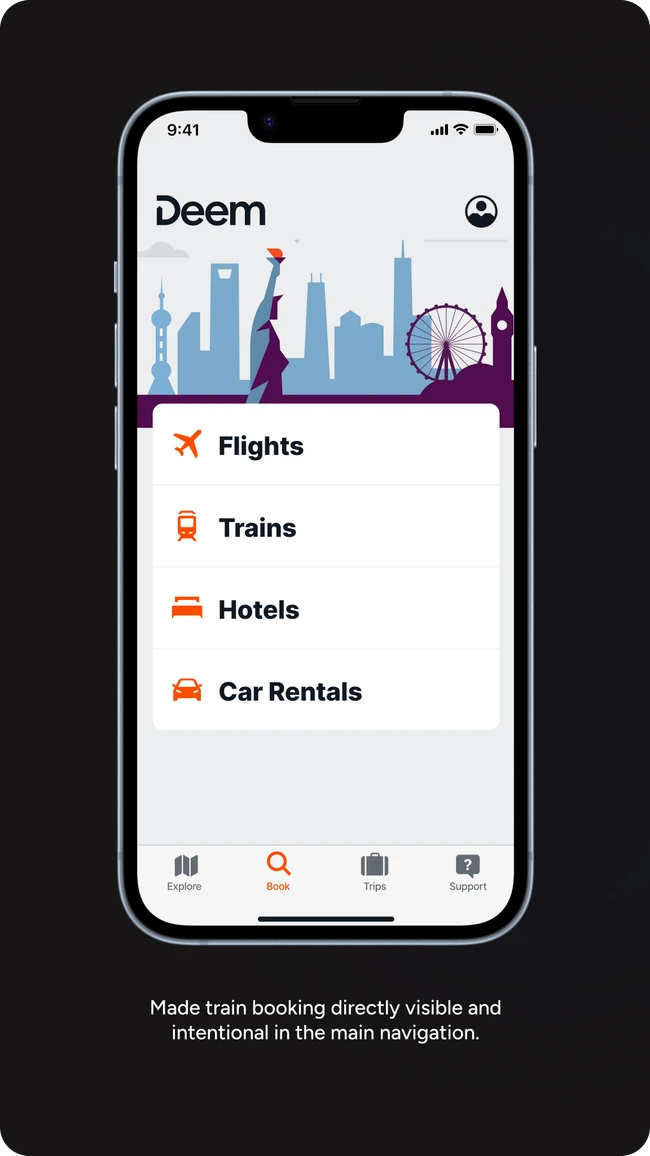
The problem wasn't that rail was missing. It was that rail was present and unrecognizable, buried inside a flight experience with no signals to help travelers identify, compare, or choose it.
04: What we learned
Why would someone choose a train over a flight?
Objective
Understand the behavioral and decision-making factors that drive corporate travelers to choose rail over flights, and learn how frequent rail travelers book today.
Method 01 · Unmoderated survey
25 participants
Travelers ranked decision-making factors from highest to lowest importance when choosing between rail and flights. This surfaced what actually drives the choice, not what we assumed.
Method 02 · 1:1 moderated interviews
Frequent travelers
Open-ended sessions with weekly commuters to understand how they book today, what they work around, and what they need from the platform.
Findings
01
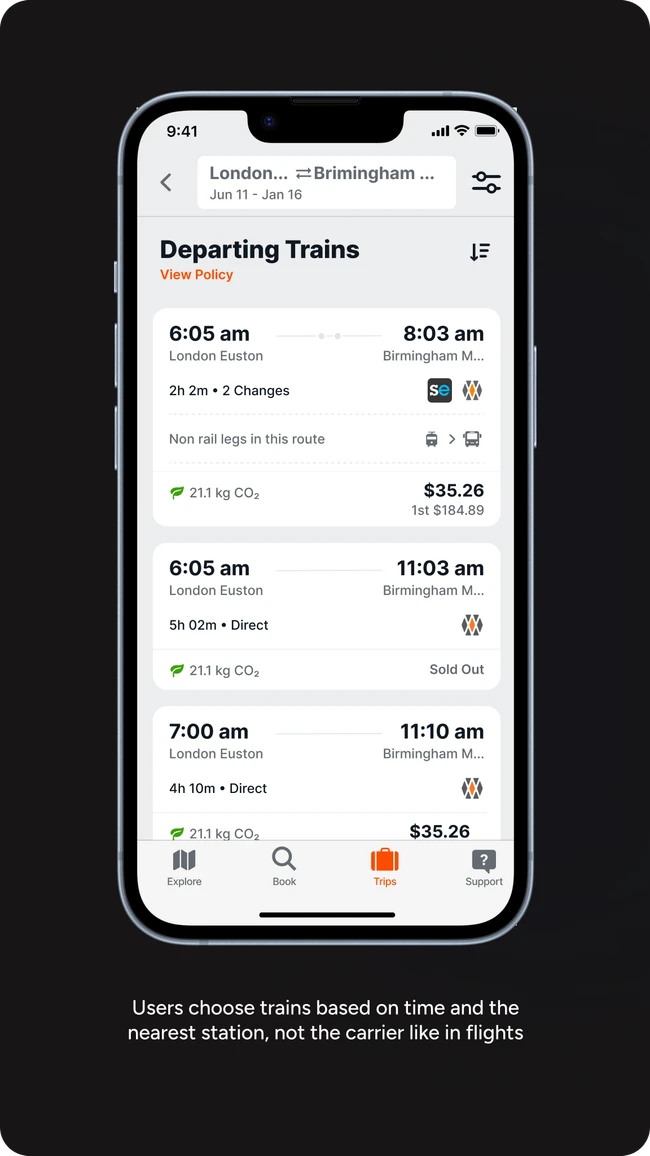
Time and stations decide the trip, not the carrier.The opposite of how travelers choose flights.
02
Rail is where work happens.No security lines, a table, and Wi-Fi; first class often costs less than a flight's economy.
03
Recurring travelers don't search. They rebook.Weekly commuters already know their train; they want one tap, not a flow.
04
Rail lived on a separate island, and that broke the trip.Separate platforms meant more cognitive load, no shared policy, missed approvals.
Three directions that shaped every screen
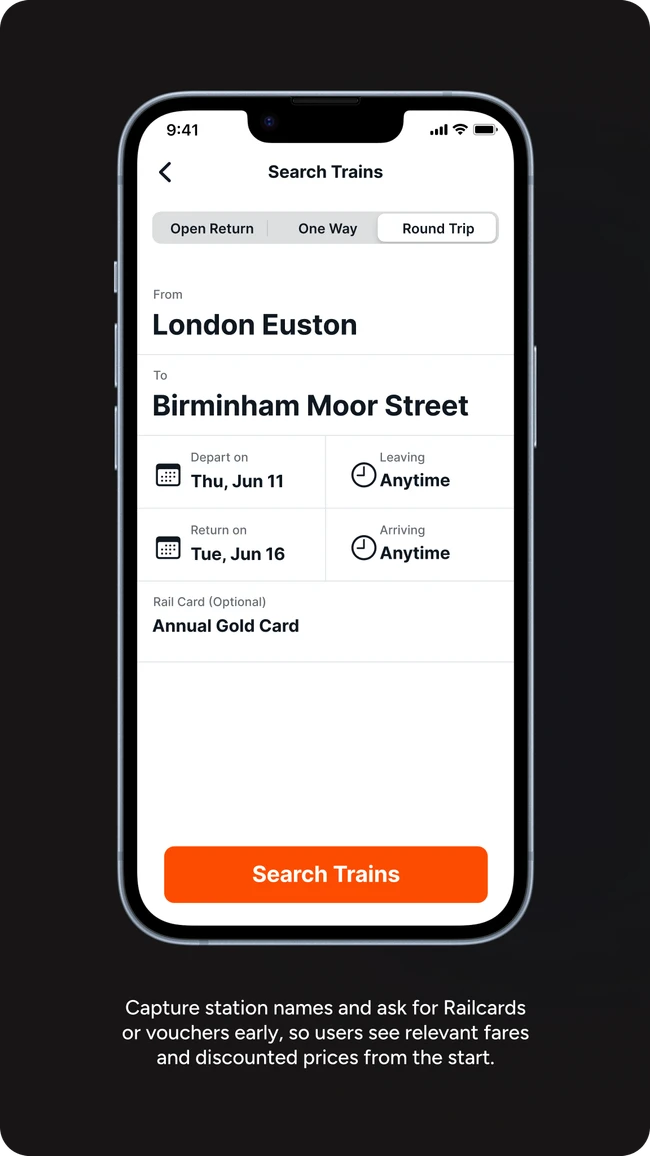
→Search prioritizes time & stations
Not operators. Not fare tiers. Time first.
→A one-tap rebook path
Recurring travelers repeat, they don't search.
→Rail joins the same cart
One trip. One policy. Hotel + Car rental + rail.
Part 2 / 3
06: The checkout journey
Checkout, curated. Verify, confirm, book.
Corporate profiles pre-fill traveler details, rail cards, and seat preferences. Payment defaults to company card, masked. All trip segments laid out together so dates align naturally across rail, hotel, and car. If a hotel check-in doesn't match your rail arrival, the system flags it before you pay. For the traveler, checkout is three taps. For the travel manager, every booking is policy compliant and auditable.
I made seat preferences editable per leg.
Quiet coach outbound, window return. Research showed commuters care more about where they sit than what they pay, so I surfaced this at checkout instead of burying it in a settings page.
I defaulted to eTicket, with station collection as fallback.
Delivery adapts to what each carrier supports. Smaller operators without eTicket don't block the booking, the flow gracefully degrades to station collection with clear pickup instructions.
I built rebook from confirmation.
"Book Another Trip" starts where the last trip ends. This came directly from research finding 03: recurring travelers rebook, they don't search.
Part 3 / 3
07: The post-booking journey
The booking is the start, not the end.
Trips, tickets, changes, and emissions managed in the app without calling an agent. Complex multi-leg journeys render as a single readable timeline with every transfer named and timed. Self-serve actions like resend, share, and cancel reduce TMC servicing cost while giving travelers full control.
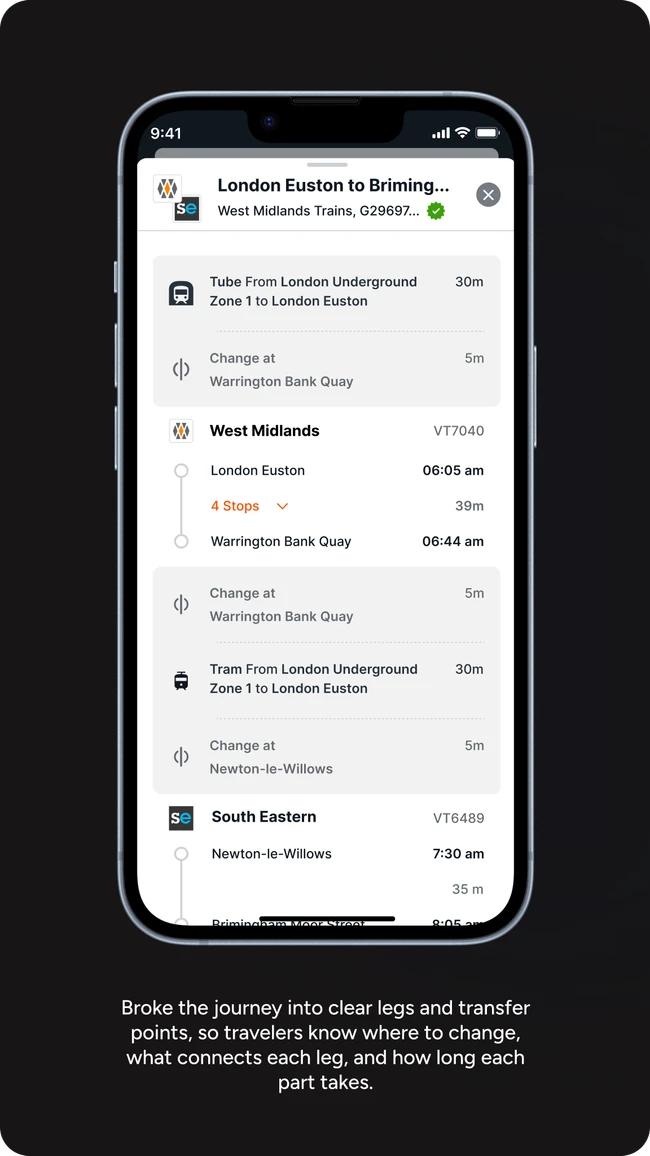
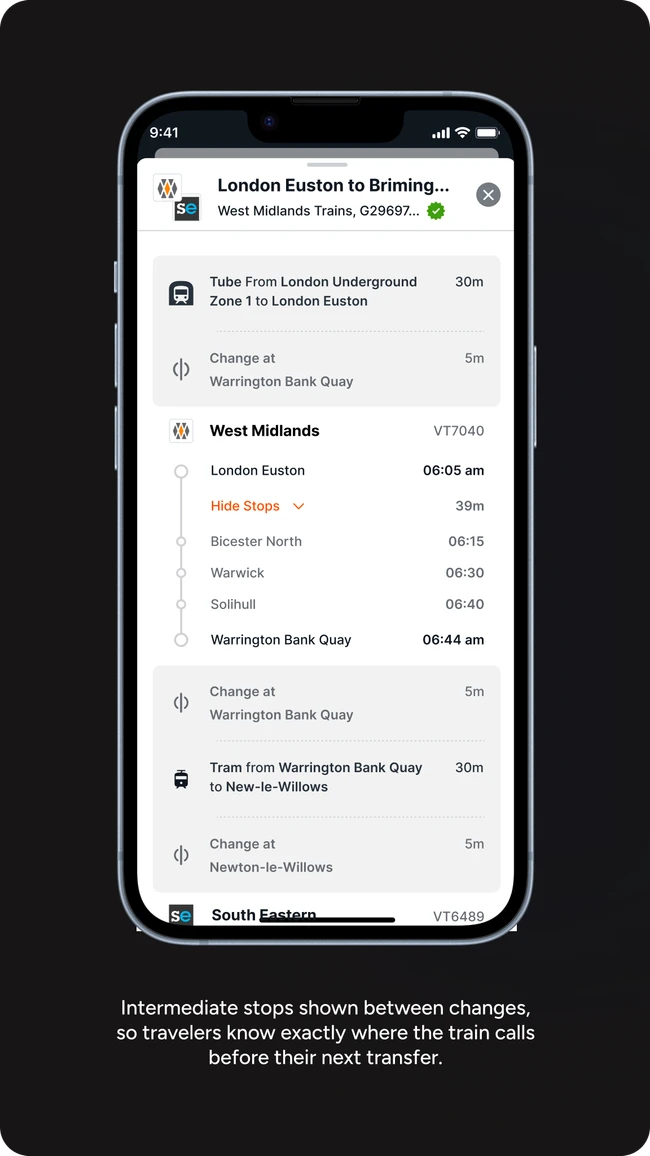
I made every transfer explicit, including non-rail legs.
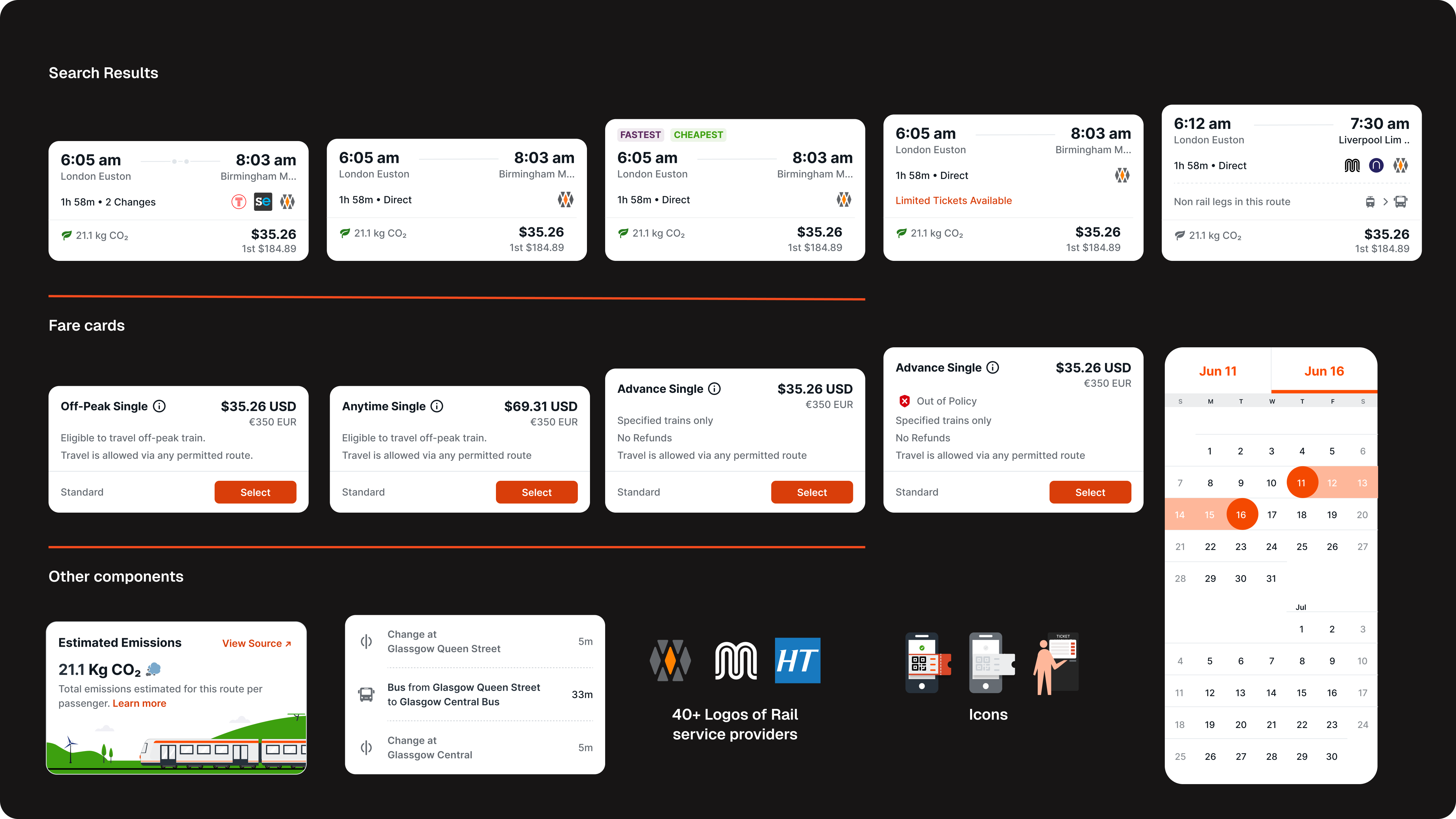
"Change at Edinburgh · 5m" or "Walk · 3 min to platform." Journeys can include tubes, buses, ferries, and walking segments we don't sell tickets for. I designed the timeline to surface every leg so travelers know what comes next, not just what they booked.
I translated emissions into human scale.
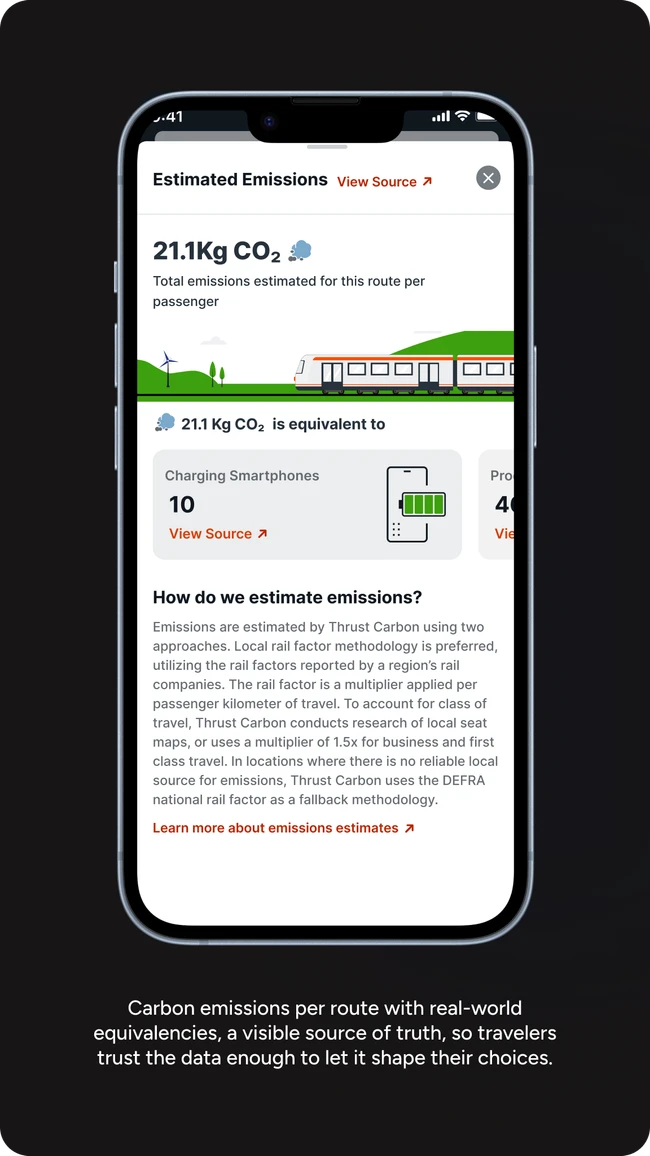
"Same as charging 10 phones." Abstract kilograms don't change behavior, comparisons do. I added methodology detail for travel managers who need ESG reporting scrutiny.
I designed self-serve trip actions to reduce agent dependency.
Resend eTickets, share itinerary, cancel, all in-app. Every avoided call is measurable TMC servicing cost saved, a metric that directly justified the project to operations.
08: Scope discipline
A launch is a sequence, not a switch. Shipping a working core meant clients could migrate immediately; complexity layered in on real usage data, not guesses.
Phase 1 · Shipped
The core experience
Dedicated search, multi-carrier UK & EU, unified cart, pre-filled checkout, trip management.
Phase 2 · +12 months
Rail seat maps
Held for v2 because operator API support was uneven. Partial would've been worse than absent.
Phase 3 · Roadmap
Disruptions · Asia
Live delay/cancel flows and expansion beyond UK/EU, scoped as carrier partnerships matured.